The Lion Women of Tehran

Tags

, , ,

by Marjan Kamali

We, in America, often get so focused on our lives and our problems that we do not pay attention to the rest of the world. Perhaps that is also true for other countries, but it is definitely a problem here in the U.S.A. I lived through many of the actual events described in this book, but I never really gave it much thought as to what the people living through these events actually experienced. I knew about the revolution in Iran, but I didn’t identify with those who lived IN it.

Kamali makes the reader feel as if they are observing the turmoil first-hand. While this is a fictional work, it reads as if it were truly autobiographical. I actually went to information about the author to see if she was telling us the story of her life. Each character comes to life and each character grows and changes over the span of the 31 years covered by the events in the book. Some characters that I disliked at first changed over time and revealed a totally different person who I could really identify with and respect.

Political freedom and women’s rights are the two main themes of this book. However, friendship and love are the motivations behind all of the action. How the women of Iran have changed and yet how they have endured in spite of all that has happened in and to their country makes for spell-binding reading. How they, as immigrants in America, have managed to fit in and to maintain their identity in a country that is vastly different from Iran adds knowledge to the reader of a strong, resilient people who refuse to be demeaned and denigrated.

I recommend this book for high school and adult readers, both men and women.
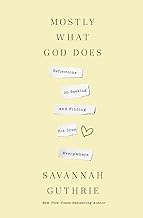
Mostly What God Does

Tags

, , , , , ,

by Savannah Guthrie

One does not often think of learning spiritual lessons from celebrities, yet I learned a great deal from this one. Guthrie’s honesty about her life and her growing relationship with God spoke to my heart. This well-known news commentator encourages all of us to seek and find God’s love everywhere.

The book is divided into six parts: Love, Presence, Praise, Grace, Hope, and Purpose. She said she thought about calling the book “Six Easy Pieces” which was the title of a piano book she had as a child, but then she realized the six pieces were actually not-so-easy pieces. Each part takes time, thought and prayer on our part in addition to the spiritual part that God does in our lives.

Guthrie provides a glimpse into her personal life as she uses her own life experiences to illustrate each piece of what it take to have a good relationship with God. We do not develop this relationship on our own power. Every part of the list is MOSTLY what God does in us as we learn to live in a deeper relationship with Him. She is open and honest about her faults and her failures in her journey.

Each chapter has blank pages which can be used as a personal journal as you read. They are to as she says “remind us to sit with whatever thought have risen within us. Blank space. Quiet. Nothingness. This is where God has the greatest opportunity to do his thing.”

I highly recommend this book as a personal devotional tool or as a text for a small group study.

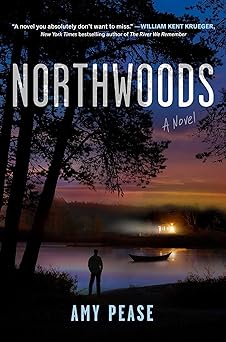
Northwoods by Amy Pease

Tags

, ,

While this is an intriguing mystery, it is so much more than that. The protagonist, Eli North, a policeman in the small town of Shaky Lake is a very flawed victim of PTSD. His discovery of the body of a young boy in a boat on a lake in Wisconsin brought back to him all the memories he had been trying to suppress after return from military duties in Afghanistan.

A young girl goes missing from the family’s summer cabin at the same time the body is discovered, and Eli is introduced to a female FBI agent who seems to be able to know what he is thinking. She and Eli, along with Eli’s mother, the sheriff of the town, discover that the two events are tied together and that the most-wealthy people of the town are involved much deeper than any of them ever imagined.

Alyssa, the FBI agent, is involved in much more than a missing child incident. What she is investigating mires Eli into conflicts of addiction and abuse. Each event in the investigation brings Eli more pain. Only his friend, Jake who had also served in the war, seems to understand what he is going through.

The story well-crafted and very descriptive. The pictures of the trauma of addiction and the mental anguish of PTSD are so clear that it will almost feel as if the reader is inside Eli’s mind. The specter suicide looms large in this tale, but hope looms larger.

While there is no sexual descriptions or foul language, I recommend this only for adults, not general young adult readers. Young adults who have experienced trauma in their lives might be able to understand the deep trauma one must face head on in order to survive. Be cautious about who reads this.

The author seems to have left the door open for a possibility of a follow-up story. I shall look for one to come.

The Chaperone by M. Hendrix

Tags

,

Stella lives in a world that has strict rules for both sexes. She doesn’t know that the New America she lives in is vastly different from the one her parents grew up in. She is taught that DANGER exists and that in order to be safe, she must:

Deflect attention. Abstain from sin, Navigate the world with care. Give obedience. Embrace purity. And, Respect her chaperone.

All girls are assigned a chaperone whenever she begins her periods. These chaperones are assigned by the government, and they remain with the family until the girl is married or unless the chaperone dies. It is the duty of the chaperone to see that the girl to which she has been assigned follows the rules. Stella is very glad that her chaperone, Sister Helen, is more of a friend than a caretaker like those of her friends. But when Sister Helen suddenly dies, Stella’s world world is turned upside down.

Not only does she get a new chaperone right away before she has accepted the death of Sister Helen, there is some suspicion in the eyes of the police about Sister Helen’s death, but also Stella is nearing the end of her high school career. That means she is expected to marry and produce children soon. None of those things make Stella happy. She especially wants to know a little bit about boys, and she wants to go to college before she settles down. Surprisingly, her new chaperone, Sister Laura, is on her side. She helps Stella attend a forbidden party and helps her find her way to the Old America, which still exists but in another state. Stella was not even aware of its existence. There she experiences a life without constant scrutiny and rigid rules, yet she worries about her little sister and all the other girls in New America who may never have a chance to see freedom.

This is a very well-written book. The characters are vivid, and the plot develops naturally. However, I do have some issues with it. There is a near-rape scene that is extremely vivid. I feel that it has more of a purient feel than is necessary for the message of the story, particularly when the readers it will appeal to are probably 6-10th graders. While Stella does stand up for herself and does stop the rape from occuring, that account need not go into the graphic depiction that it does. I do not want to say, “Do not buy this book.” But, the library-media specialist who does so MUST be aware that its inclusion in a school library might bring on the ire of parents. It also takes a very stereotypical view of right-wing conservatives. All the men, except a few outliers are painted as being very misogynistic and extremely religious.

Obviously, the author is portraying the view of a divided America, but the New America that is presented is not one in which most of us would like to live. Perhaps that is exactly the point, but I feel the story goes beyond that and promotes the idea that conservative Christians are bigoted and narrow-minded while all the rest are embracing true freedom. It might be worth your time to read this and then to draw your own conclusions. Perhaps I am coming down a little hard on the authot, and I would appreciate some other input.

Questions I Am Asked About the Holocaust

Tags

,

by Heidi Fried

Remembering the past in all its glory and/or depravity is the first step to changing the future. Someone has said that if we do not remember the past, we are doomed to repeat it. Since Heidi Fried lived through the events of the Holocaust, she is able to help us see clearly what happened in the hope that we never repeat that history.

Some people today are so ignorant that they are even saying the Holocaust did not happen. Fried shows the reader clearly that it really happened. The question of why it happened at all is one that can never be answered to anyone’s satisfaction. It is probably best just to acknowledge that it did happen and to do everything in our power to see that it never happens again. That is Fried’s position.

Her book is designed to answer questions she has encountered over her lifetime. At the age of 90 she has reached the step of gerotransendence in her life and thus is able to look back at all that happened to her with a detachment that probably was not possible for her earlier. Her dispassionate responses to the questions are reflective of her age.

Fried explains about how World War II changed her life as a Romanian Jew who was from a good middle class family to being a slave in a labor/extermination camp. At nineteen, she was looking forward to continuing her education at a university, but instead she found herself orphaned with a younger sister to care for and to try to keep both of them alive. Fortunately, both girls were in their late teens and appeared strong enough to work—at least for a while—for the Nazis. Both girls survived and went to live in Sweden.

Fried answers over forty questions for the reader. Some of them are quite personal, such as: Where you raped? How did you handle your periods? Why did you choose Sweden? Others are more philosophical, such as: Why did Hitler hate the Jews?  After all that has happened, do you still believe in God? Could it happen again?

Many authors have produced good works about the Holocaust, but I feel that first person narratives are the best source of true information. Every library should add this book to its collection. Social studies teachers would find this a very valuable source for discussions on the Holocaust. Fried even provides a list of discussion questions. I highly recommend the purchase of this book.

Overturned: the Constitutional Right to Abortion by Carla Mooney

Tags

,

Many things in our country have caused division of opinion. The overturning of Roe v Wade was certainly one of those things. This book gives a good timeline around the court’s decision and the events that have followed. But the title itself shows bias. What was overturned was the Roe v Wade decision based on the fact that, in the eyes of this Court, it was never a constitutional right. It was a decision which should have been made by the states. The book purports to show things from both sides and even lists organizations from both sides which can be contacted for more information, but the list of internet sources in the index, except for the last one given, only show a pro-abortion side. Most students will move to the internet for more information on the subject they are researching, and the placement on the list will affect their understanding of the situation. There are other sources which could have been listed, such as https://www.statista.com/statistics/658555/number-of-abortion-deaths-us

I found other biased things as well. No scientific definitions about when life begins was given. Stories from women who were unable to get the abortions they needed or desired are supplied, but none from women who changed their mind based on efforts of anti-abortion support groups. There are few quotes or sidebars from pregnancy support groups. The picture used to start the book shows a group of young men supporting anti-abortion, but no women are in that picture. Then, the picture beside it shows a single woman asking for her right to decide. The pictures create in the mind the idea that men are against abortion and women stand alone in their choice. Neither of those things are true, they are the opinion of the author.

The author quoted a statistic which said that one in four (Another place in the book says “five.”) pregnancies in the U.S. end in abortion. The term “abortion” as it is used by the medical field means any termination of a pregnancy by any means, natural or medical. The author chose to use the commonly understood definition, which is a termination of a pregnancy by medical means. This skews the statistics and makes it appear the 25% of pregnancies are ended by the mother’s choice. That simply is not so. A little further research would show that, while that number is true, the reason for the termination is most often from natural means. Most people called the ending of pregnancy in a natural way a “miscarriage,” but the medical field still uses the term “abortion.” Realizing the subtle change in definition makes a big difference in understanding the statistic. Still, this book provides references and a perspective of the legal aspects of the Supreme Court’s decision to return the decision on abortion to the individual states. It is a subject needed in our schools. I am recommending the purchase of this book with reservations, in spite of what I see as a subtle bias. I would suggest that librarians try to get material on both sides of the issue in order to allow their students to do adequate research.

Swift and Hawk Cyberspies

Tags

by Logan Macx

Two kids, Caleb and Zen, in a special school for technologically gifted teens, find themselves wrapped up in a secretive group named Möbius as they try to free their families from kidnappers. Caleb’s father had passed away shortly after the family’s arrival in London, and Caleb knew his mother was a CIA agent, as his father had been, but not much else about her work. Zen’s parents were both well-known scientists. Both families are captured by some unknown bad guys, but Caleb and Zen manage to elude the captors. They contact their teacher, Professor Clay, and she reveals to them that she also is an undercover agent. Caleb and Zen become agents Swift and Hawk in Möbius the secret spy network run by Prof. Clay. In order to save their families, they must travel to the island of Spøkelsøy or Ghost Island, in Norway. Their lives are threatened at every turn, and they have to rely on their knowledge of robotics, AI, and themselves to survive and succeed in saving their families.

This is a fast-paced exciting adventure sure to enthrall any middle school age fan of computer gaming. There is violence, but it is part of the story. I think this is just the start of the Adventures of Swift and Hawk. I recommend this as an additional purchase for the middle school reader.

The First Thing About You

Tags

by Chaz Hayden

This coming-of-age tale is a first novel for Hayden. It is about a sophomore in high school who moves with his family from San Diego, California to New Jersey. That sort of move, in and of itself, would be challenging for any teen-age boy. But Harris Jacobus is not just any teen-age boy. He has spinal muscular dystrophy and has to have a physical assistant for all aspects of his life. His skeletal muscles do not function very well, but his mind and the rest of his body are fine. Harris has accepted his limitations, but he has never learned to relate to other people or to make friends with people his own age. He also never had good luck with the medical aides assigned to assist him. He relies on his mother to always be there and to take care of him.

Harris hopes that this move will bring big changes in his life even though he and his older brother will be going to separate high schools. Harris would like to have friends—maybe even a girl friend, but in order to do that he has to learn how to let people know who is. Harris has a theory about people’s favorite colors and how they will relate to him. His favorite color is blue, and he believes that people whose favorite color is blue, green or violet will not be compatible with him. He thinks that opposites attract; therefore, his best chance for having a good relationship lies with people who are orange, red, or yellow. The first question he always asks someone is, “What is your favorite color?” Their response colors the way he thinks they will interact with him.

The first person he meets is a girl by the name of Nory. She is in most of his honors classes, and they get paired up as homework partners. But she refuses to tell him her favorite color. The next person he meets is Zander, a nerd who sits with two other nerdy guys at a lunch table and whose favorite color is yellow. And the next important person to come into his life is Miranda, his personal assistant, whose favorite color is red. Harris calls her his executive assistant. Through each of them Harris gradually learns to be a normal teenage boy. Then, because of events in his life, he shuts out Zander and Nory; and Miranda leaves him because of her behavior. Harris finally grows up and realizes that Zander and Nory did not abandon him, and that Miranda, although she took him to rock concerts and drove fast, was not a good friend to him.

I was totally blown away by this novel. It is real and gripping. It allows the reader to experience, with no holds barred, the life of a teenager with a life-altering condition. The author, himself, has spinal muscular atrophy and lives his life from a wheelchair. It must have taken a great amount of courage for Hayden to write this book and be so open about how people with different abilities are treated. He openly discusses how his teachers talked about him while he was present and how others spoke to him as if he were a child. There are a few expletives and Harris does get drunk at a party on night. But the book points out that this behavior was wrong, and Harris regrets it. I highly recommend this book for any middle school and high school student.

Booked for Death by Victoria Gilbert

Tags

,

This is the first of a new mystery series entitled A Booklover’s B&B. It is well-written and will keep the reader wrapped up in the mystery of a murder which occurs during a Tey mystery book club discussion. The discussion takes places a bed and breakfast named Chapters in Beaufort, North Carolina.

The reader will learn about North Carolina and about a Scottish mystery writer named Josephine Tey. Tey is actually a pseudonym for author Elizabeth MacIntosh, but that is never revealed in the story. I had never heard of Tey, so naturally I began to research her to see if she actually existed or if Gilbert had invented her. MacIntosh, herself, is an interesting character who wrote non-fiction under her own name and wrote plays under the name of Gordon Daviot. As Josephine Tey, she wrote mystery novels. Perhaps she felt that keeping the three genres under different names added to the credibility of each one.

This is a squeaky-clean story also about a widow named Charlotte Reed who inherits a bed and breakfast from an aunt she barely knew after her husband’s untimely death. Charlotte sets out to reinvent herself and finds that the aunt who had left her the bed and breakfast had a similar journey in life. What she discovers about her Aunt Isabella, though, also makes her a suspect in the murder.

Gilbert weaves a very believable story about each character, but she leaves little clues as to the identity of the murderer and the true story of Aunt Isabella along the way. At the end, I figured out who the murderer was just before I read the reveal scene. This book obviously sets the stage for the rest of the series. I shall be looking forward to reading more in this series. I recommend it for all ages of mystery readers.

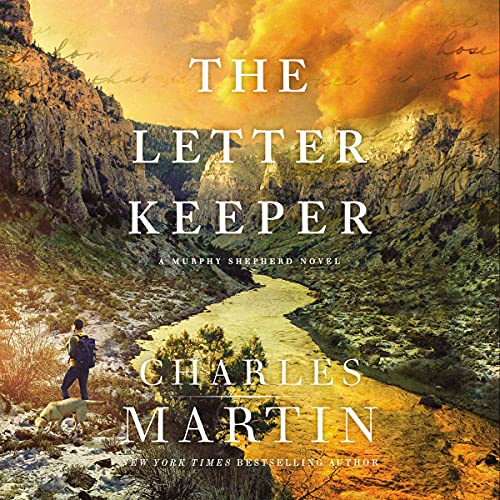
The Letter Keeper

Tags

,

by Charles Martin

I almost didn’t pick this book up in my library. The cover didn’t impress me. I had never read anything by this author, and it was marked as number two of a series. But I am very glad that I did take it out anyway. It was on the NEW shelf. It has a copyright date of 2021, but I suppose it was new to my library.

It is the most moving tale I have ever read of sex-trafficked children and the effort it sometimes takes to free them–not just from the clutches of their abusers, but also from the prisons that abuse has made in their minds and hearts. It is also a tale of sacrificial love by a man who was trained as a military special operator, who became a priest and a writer. This man is Murphy Shepherd, an author, who spends all of his money to rescue children in sexually slavery and to restore them to normalcy.

In doing this he is nearly killed several times, yet he does not kill those who attacked him. He turns them over to law-enforcement. He loses two of his sanctuaries to someone who are trying to stop him from destroying their business.

He has his own personal problems. He seems to lose those he loves. Consequently, he has trouble opening himself up to love, and when he finally does his life is turned upside down. Like the Great Shepherd who goes to search for the lost sheep, he drops whatever he is doing and goes to look for those who are lost.

The psychological trauma these victims endure is clearly spelled out in the pages of this book. It not for the squeamish reader, but it will open your mind to what others may be enduring. It also gets the reader thinking about what life is worth, and whether or not sacrificing your life for another is worth the cost.

I highly recommend this book for mature teens and for adults. It does have a Christian message, but it is not fake or preachy. It is the most honest book I have read in a long time. I fully intend to find other books written by Martin.