• About Me

truebooktalks

~ The greatest WordPress.com site in all the land!

truebooktalks

Author Archives: truebooktalks

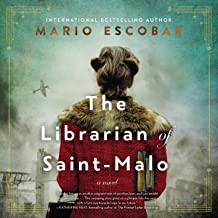
The Librarian of Saint-Malo

01 Tuesday Feb 2022

Posted by truebooktalks in Adult fiction, Historical Fiction, Political fiction, Uncategorized

≈ Leave a comment

Tags

Fiction, political fiction

by Mario Escobar

In these days of books on World War II and the holocaust being questioned and, in some cases, banned, I would like to suggest this novel. Escobar has given us a view of the French Resistance that is very unique. Although there are instances of sex, and of violence, the reader is not bombarded by them. We clearly see they exist, but the emphasis is on the growth of a young woman in spite of what she has to endure.

We see the events of World War II through the eyes of a French librarian, Jocelyn, who is tasked with the job of protecting the library of her town. We see her passion for protecting all texts, and we also see how the war changes her for the better.

Many Frenchmen went along with the demands of Germany to try to keep the Germans at bay and to save their own lives. Others tried passive resistance. While still others became an active part of resistance. Through Jocelyn’s eyes we meet her husband, Antoine, a policeman for Saint-Malo, who is forced to become a soldier for the French army. We see Jewish shopkeepers like Denis, who lose their businesses and in many cases their lives. We see Catholics, Protestants and Jews working together to try to save their country. We see others, like Mrs. Fave, who turns people into the German occupiers to gain extra food or favors.

We also see two different sides of the German army. One is Adolf Bauman, an S.S. officer who is assigned to live in her house. He is a rabid Nazi who wants to destroy the old history which Jocelyn is determined to protect. Bauman lives for cruelty. The other is Hermann von Choltiz, who is part of the military police of the Wermacht. His job is to find valuable art and books and to see that they are properly cared for and protected, usually by hauling things off to Berlin. He is a Nazi, but he is not interested in killing and enslaving people. He is really doing his job to the best of his ability without causing pain.

Jocelyn tells her story mostly through letters that she writes to the author Marcel Zola, not knowing if he would ever see them and respond. She begins by telling about her wedding and her lack of faith in God. By the end of the book, that has changed and she actually has a deep faith in God. This is NOT a preachy book. It simply shows you Jocelyn and her doubts and questions. Jocelyn takes drastic measures to save the most valuable books. She goes to Paris and becomes a member of the underground with an eye to passive resistance. Once, she is even captured and tortured.

In the end, it was the saviors of France, the Allies, who destroy the library in an effort to root out the Nazis in the area. Even as she is grieving for the loss of her town and her books, Jocelyn speaks the hard truth, “For four years, France had sold its soul to the devil, and he always requires full payment of a debt.”

Escobar tells us this: “Everything is made of words. We would not understand a thing without them. They define our feelings, fuel our ideas, and inspire our faith. Without them the world would be in silence.”

Although this book was written for adult readers, I would not have any reservations about giving it to a teenager who is wanting to learn about World War II. I highly recommend it for all high school and public libraries.
Share this:

  • Click to share on X (Opens in new window) X
  • Click to share on Facebook (Opens in new window) Facebook
Like Loading...

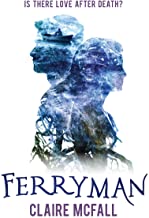
Ferryman by Claire McFall

13 Thursday May 2021

Posted by truebooktalks in Ghost stories, Mythology, Uncategorized, Young Adult

≈ Leave a comment

Tags

afterlife, death

Dylan is involved in a deadly train crash in a tunnel in Scotland after she took off to meet the father she has never known. She wakes up and begins to make her way out of the wreckage. Her cell phone doesn’t work, and she has no idea where she is. She thinks she has survived unscathed, but she couldn’t be more mistaken. She is dead and actually in a wasteland that is being created by her own memories, thoughts and fears. She must cross this wasteland to get to her afterlife destination. After she emerges from the tunnel, she meets a teenage boy sitting on a rock. Tristan tells her she is to come with him, and since she has no other choice, she follows him. Gradually she learns that she is dead and that Tristan is her Ferryman. It is his job is to guide Dylan’s soul safely across the treacherous landscape, a journey he has made a thousand times before. Only this time, something’s different. What occurs between Dylan and Tristan is not the usual things that have occurred during crossings.

What happens to us when we die is a question that is ever in our minds. The answers we accept are determined by our understanding of the essence of man–his soul. Our concept of death and the possibility of life after death is the major theme of this book. McFall pulls ideas from several religions and mythologies of the past to explain what is going on in her story. The idea of a ferryman is, of course, taken from the myth of Charon who ferried the dead across the River Styx. Tristan is not the dirty fearful image of Charon. He is able to take on whatever form is needed for the newly dead to willingly agree to go with him on the journey to the next life. In this case, he is a young teen-age boy who is attractive to the girl who has been killed in a train wreck. Is it possible for the dead to love another being? Is it possible for the ferryman to love someone? Is it possible for the dead to return to this world? All these questions McFall answers very satisfactorily for the reader. I highly recommend this novel for teen readers.

I understand that Ferryman (with its sequels,Trespassers and Outcasts) is in development to be a major motion picture.

Share this:

  • Click to share on X (Opens in new window) X
  • Click to share on Facebook (Opens in new window) Facebook
Like Loading...

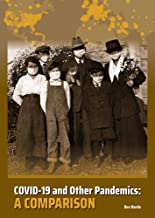
Covid 19 and Other Pandemics: a Comparison by Don Nardo

13 Thursday May 2021

Posted by truebooktalks in History, Social Issues, Young Adult

≈ Leave a comment

Tags

Health, teen readers

This image has an empty alt attribute; its file name is covid-19-image.jpg

While we are in the throes of COVID-19, we need to remind ourselves that pandemics are not new and that many of them have been many times more deadly than the pandemic we face today. Our current crises is only eighth (3.4 million deaths) out of others like the Black Death (1347-1351 AD) at number one with 200 million deaths, The Smallpox in the New World (1520-1796) at number two with 56 million deaths, and the Spanish Flu (1918-1919) at number three with 40-50 million deaths. We must also remind ourselves that there will be future pandemics facing humanity.

Nardo gives the reader a look at pandemics of the past and helps us understand what science has learned from them. He also goes into the effect that disease had on the New World, both in loss of life of the indigenous population and the effect on the economy of their deaths. The Aztec people were almost totally wiped out by disease. Since they believed that the diseases were caused by gods and since they noticed that the conquerors were not getting sick (because of the immunity they had developed), many of them turned to the new god as their salvation.

He explains that the need for many laborers to work fields and the lack of indigenous people to do that led to the expansion of the African slave trade. Many Africans, like the Europeans, had developed immunity to the diseases which were killing off the natives. Nardo ends the work with a good discussion of COVID-19 and what has happened so far. He does not take sides on the debates swirling in our society. He provides facts and allows the reader to make his/her own decision. The book has excellent illustrations, a good bibliography and index. I think it will be very useful for middle school, high school, and public libraries.

Share this:

  • Click to share on X (Opens in new window) X
  • Click to share on Facebook (Opens in new window) Facebook
Like Loading...

Hurricane Summer

11 Friday Dec 2020

Posted by truebooktalks in Uncategorized, Young Adult

≈ Leave a comment

Tags

teens

How can traumatic events both destroy and build? Tille learns through events in her life in Jamaica one summer that they can. She experiences wonderfully good things and horribly bad things. Both serve to change her for the better. Four men, one her father and the other three very young men that she encounters on a trip back to her parents’ land are the destruction and the building blocks of her life. She yearns for her father’s love, but he has his own demons and cannot give her what she so desperately needs. She falls in love with one young man, Hessan, only to find that, while he does love her, he is promised to another girl, and he will not turn his back on that promise. Another young man, Jahvan, attacks her sexually after Hessan’s fiancee lies about her and tells him that Tille really wants him. Only Andre, her dark-skinned cousin, really cares about her and treats her kindly. In the end he is destroyed by the hurricane that hits the island. Her aunts believe that she is promiscuous. They even call her a slut. However,Tille learns that everyone in her family has secrets hurts. She finally realizes that she can’t do anything to help anyone. The only person she can help is Tille. She can only move on from the destruction of the hurricane summer.

I really liked the story, but I wonder how it will be received by readers who are not familiar with Jamaican patois. The author does provide a list of terms right at the front of the book to enable readers to understand the conversations of the characters. I had to resort to referencing that list many times. Nevertheless, I do not think many high school students will be willing to read material that they cannot readily understand. I can only suggest that it be an optional purchase for libraries.

How can traumatic events both destroy and build? Tille learns through events in her life in Jamaica one summer that they can. She experiences wonderfully good things and horribly bad things. Both serve to change her for the better. Four men, one her father and the other three very young men that she encounters on a trip back to her parents’ land are the destruction and the building blocks of her life. She yearns for her father’s love, but he has his own demons and cannot give her what she so desperately needs. She falls in love with one young man, Hessan, only to find that, while he does love her, he is promised to another girl, and he will not turn his back on that promise. Another young man, Jahvan, attacks her sexually after Hessan’s fiancee lies about her and tells him that Tille really wants him. Only Andre, her dark-skinned cousin, really cares about her and treats her kindly. In the end he is destroyed by the hurricane that hits the island. Her aunts believe that she is promiscuous. They even call her a slut. However,Tille learns that everyone in her family has secrets hurts. She finally realizes that she can’t do anything to help anyone. The only person she can help is Tille. She can only move on from the destruction of the hurricane summer.

I really liked the story, but I wonder how it will be received by readers who are not familiar with Jamaican patois. The author does provide a list of terms right at the front of the book to enable readers to understand the conversations of the characters. I had to resort to referencing that list many times. Nevertheless, I do not think many high school students will be willing to read material that they cannot readily understand. I can only suggest that it be an optional purchase for libraries.

How can traumatic events both destroy and build? Tille learns through events in her life in Jamaica one summer that they can. She experiences wonderfully good things and horribly bad things. Both serve to change her for the better. Four men, one her father and the other three very young men that she encounters on a trip back to her parents’ land are the destruction and the building blocks of her life. She yearns for her father’s love, but he has his own demons and cannot give her what she so desperately needs. She falls in love with one young man, Hessan, only to find that, while he does love her, he is promised to another girl, and he will not turn his back on that promise. Another young man, Jahvan, attacks her sexually after Hessan’s fiancee lies about her and tells him that Tille really wants him. Only Andre, her dark-skinned cousin, really cares about her and treats her kindly. In the end he is destroyed by the hurricane that hits the island. Her aunts believe that she is promiscuous. They even call her a slut. However,Tille learns that everyone in her family has secrets hurts. She finally realizes that she can’t do anything to help anyone. The only person she can help is Tille. She can only move on from the destruction of the hurricane summer.

I really liked the story, but I wonder how it will be received by readers who are not familiar with Jamaican patois. The author does provide a list of terms right at the front of the book to enable readers to understand the conversations of the characters. I had to resort to referencing that list many times. Nevertheless, I do not think many high school students will be willing to read material that they cannot readily understand. I can only suggest that it be an optional purchase for libraries.

Share this:

  • Click to share on X (Opens in new window) X
  • Click to share on Facebook (Opens in new window) Facebook
Like Loading...

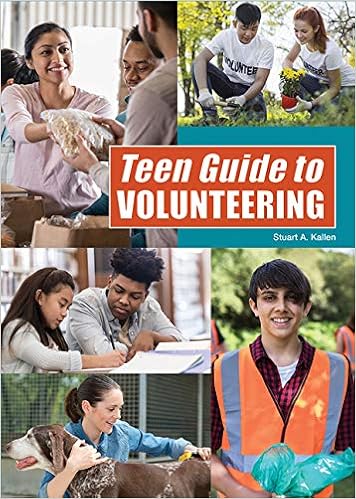
Teen Guide to Volunteering by Stuart A. Kallen

19 Thursday Nov 2020

Posted by truebooktalks in Non-Fiction, Uncategorized, Young Adult

≈ Leave a comment

Tags

social justice, teen readers

Teens of all ages need to know that they can make a difference in this world. Not only will they make the world better, they will make themselves better by helping others. Kallen has presented them with many different options ranging from working in a soup kitchen to helping out neighbors. He even discusses the possibility of setting up on-line donations.

One of the things that I particularly like was the list of web-sites that readers could go to to learn more about volunteering. I have supplied the list from the appendix of the book. Check these out to see what each site offers.

DoSomething.org (www.dosomething.org/us)

MLK Day of Service (www.nationalservice.gov)

Operation Gratitude (www.operationgratitude.com).

Pet Partners (www.petpartners.org).

Volunteer Match (www.volunteermatch.org).


Share this:

  • Click to share on X (Opens in new window) X
  • Click to share on Facebook (Opens in new window) Facebook
Like Loading...

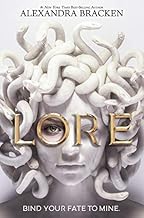
Lore by Alexandra Bracken

19 Thursday Nov 2020

Posted by truebooktalks in Fantasy

≈ Leave a comment

Tags

Mythology, teen readers

Lore

The important things in life: love, honor, compassion and hope are revealed through the actions of a young girl who finds herself caught up in the Agon of the gods. Zeus had commanded that all his descendants were to battle to the death during the Agon until only one remained. An Agon could only occur every seven years for only seven days.  At the end of that time, the survivors would be allowed to regroup until the next Agon.  Ancient families of mortals and demi-gods would serve as the hunters in the next Agon. If one of these mortals killed a god, he/she could take their power and become that god in the next Agon.The children of those ancient families were trained as fighters in special schools. Children who could not fight due to some physical problems served as messengers between families.  They wore a special badge to indicate that they were not to be killed.

     Lore, or Melora, is a part of the ancient family of Perseous, one of several ancient families of the demi-gods. Lore’s family was destroyed on the last night of the former Agon.  She, alone, had escaped the massacre of her family. She wants desperately to be out of the Agon, but Fate does not allow that.  She is forced to participate in it when she meets up with Castor, a friend from another family, and Van, a messenger. Together they save the life of Athena. Lore thinks she is binding herself to Athena to destroy the family that slaughtered hers.  But she learns that things are not as the seem and that the gods willingly use mortals to achieve their own ends.

     This book is a unique take on the gods and goddesses of history. There is much violence and bloodshed, but the author writes about those things in a way that does not sensationalize them.  The reader will see two love interests; one heterosexual and one homosexual.  These, too, are not sensationalized.  There is nothing in the book, except some foul language, that would keep any reader of mythology from wanting to read it. The Agon, as described in the book, is an entire creation of the author, yet it makes the reader wonder, “What if it is true?”  I recommend this for readers in high school.

  • Adult
  • Adult fiction
  • Archeology
  • Children's Books
  • Children's Non-fiction
  • Family Helps
  • Fantasy
  • Ghost stories
  • Health
  • Historical Fiction
  • History
  • Horror
  • language arts
  • Missions
  • Mystery and Suspense
  • Mythology
  • Non-Fiction
  • Picture Books
  • Poetry
  • Political fiction
  • religious fiction
  • science
  • Science Fiction
  • Social Issues
  • social studies
  • Uncategorized
  • Young Adult
  • Adult
  • Adult fiction
  • Archeology
  • Children's Books
  • Children's Non-fiction
  • Family Helps
  • Fantasy
  • Ghost stories
  • Health
  • Historical Fiction
  • History
  • Horror
  • language arts
  • Missions
  • Mystery and Suspense
  • Mythology
  • Non-Fiction
  • Picture Books
  • Poetry
  • Political fiction
  • religious fiction
  • science
  • Science Fiction
  • Social Issues
  • social studies
  • Uncategorized
  • Young Adult

Share this:

  • Click to share on X (Opens in new window) X
  • Click to share on Facebook (Opens in new window) Facebook
Like Loading...

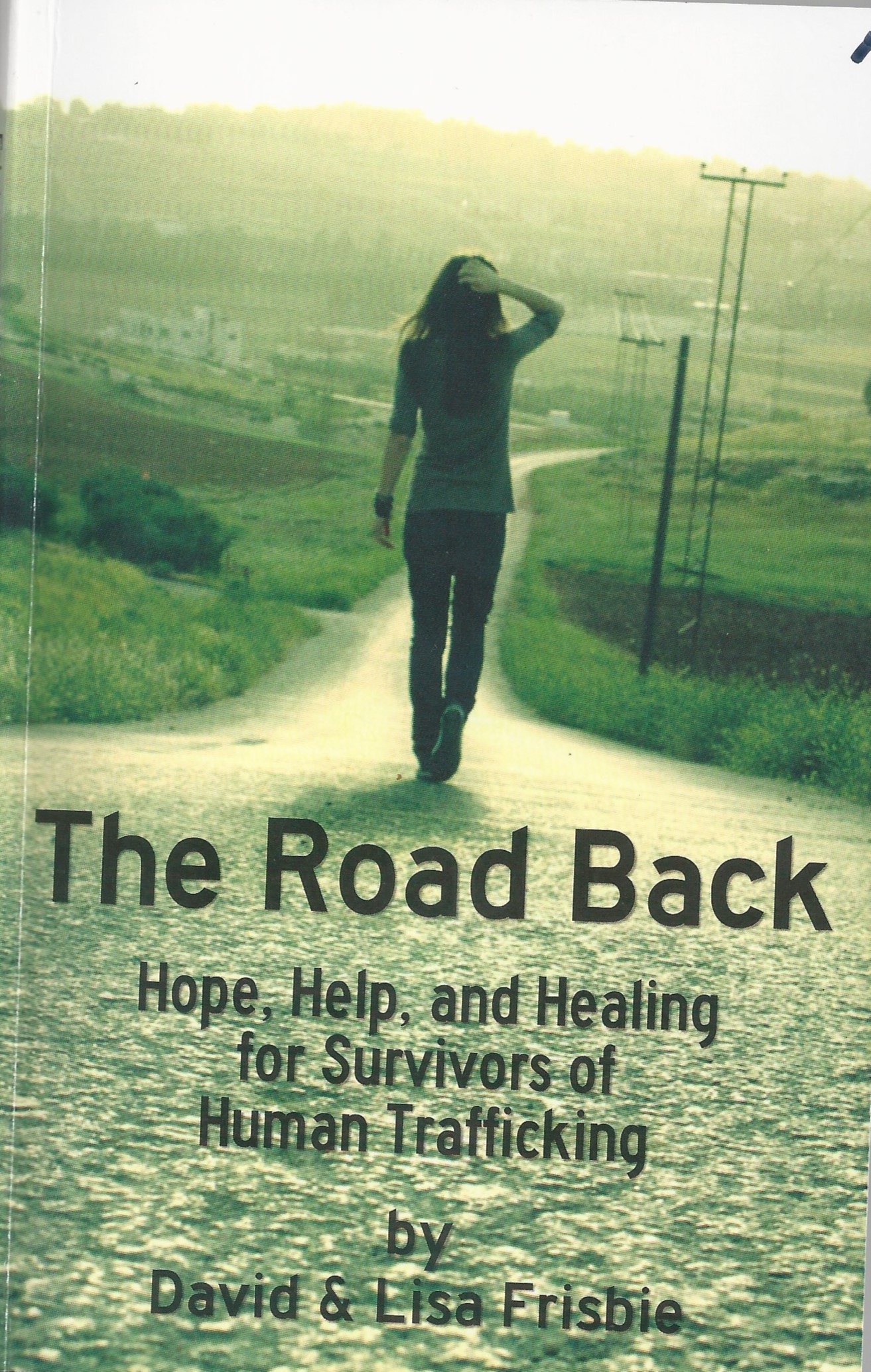
The Road Back by David & Lisa Frisbie

05 Friday Jun 2020

Posted by truebooktalks in Adult, Missions

≈ Leave a comment

Tags

abusive relationships, slavery, social justice

Every adult person is probably knowledgeable to some degree  of the  existance of slavery in our world.  Most are not aware of its extent. Here are some facts: There are 27 million persons in the world who are in slavery.  The majority of them are enslaved for the sex trade.  Among those who are enslaved for sexual trafficking, 80% are women and half of those are underage females.  Each facilitator, or pimp, averages 4.5 people in their group. A significant and growing number of these facilitators are women. Many teens in the U.S are trafficked while they are in middle school or high school  The first contacts are usually made through social media, such as Facebook and Twitter This is not a big city problem; four Tennessee counties each reported more than 100 cases within their borders in a 24 month period.

The above are a few of the facts the reader will learn from this book. The first part of the book, before the actual chapters begin introduce the reader to the purpose of the book, the authors of the book and their credentials, a prologue which explains how the authors came to be involved in rescuing trafficked people, and a dedication to those who helped in this cause. In each chapter are personal stories of those who have been saved from sexual slavery.

Chapter one is devoted to the problems in the Asia and Pacific area, in particular to the Philippines where most of the trafficking is done online.  Surprisingly, I discovered that the parents, themselves, are often the purveyors of this type of pornography.  The economic conditions they face force them into the business as a way of survival. Those who want to help must approach the problem from several different avenues. Helping the economic situation is often part of the solution. The Church of the Nazarene has established one children’s home which can handle up to 20 residential children at a time. The church partners with several other groups to provide the physical, psychological, and social care needed. Maria’s story is told in this chapter.  She and her two sisters were rescued in 2016. Maria was ten.

Chapter two discusses a program that the church has founded in South Africa named S-Cape.  This program was developed by a woman named Madison Barefield from the U.S who interned  in Hawaii then continued her studies in South Africa. There her heart was moved for the plight of those people taken into the sex trafficking business. She began to actively search for ways to help them.  Partnering with Business Tech, she learned that 250,000 persons are being victimized in the RSA. Business Tech estimates that of those exploited people only one percent will be able to leave it in their lifetime. That is only 2,500 that may one day be rescued. Madison engaged the help of another woman, Miryam Cherpillod.  Together they campaigned and helped the RSA to pass the Trafficking in Persons Act of 2013. S-Cape is centered in Capetown, RSA.  Kathryn’s story tells of how she was enticed by another woman to go with her to get a “good job” and how that job led to her enslavement.

Chapter three discusses efforts in Europe to deal with the issue.  It was in Europe that the authors first began their work with a Romanian pastor’s wife named Monica Boseff. The three of them worked to begin a Center that would provide a safe refuge for exploited women.  Monica traveled all over Europe and North America to spread her message of hope and to raise money for the Center.  Her efforts drew the attention of the BBC .  The piece they broadcast further helped in her mission.  During a visit to Romania, then vice president, Joe Biden gave an award to the Center and to its director for their efforts in stopping the exploitation of women. The story in this chapter is about how a concerned neighbor worked with the Center in Romania to help a young mother and her child escape a husband who was trafficking her.

Chapter four provides many facts about the sex business in San Diego county of California. In that one area there are more than 8,000 victims a year.  As many as 110 separate gangs are involved in it.  Human trafficking revenue is second only to drug trafficking there because it is highly profitable for the gangs. Jamie Gates, a graduate of Eastern Nazarene College and of the Nazarene Theological Seminary combined his interest in cultural anthropology and his heart for compassionate ministries to found and fund the Center for Justice and Reconciliation at Point Loma Nazarene University in San Diego. Working with Ami Carpenter of the University of San Diego, he produced a report about the  extent and nature of sex trafficking in San Diego and the Tijuana, Mexico region in order to bring awareness of the problem to people who can help make changes. The story of Jessica Kim, a survivor of sex trafficking is told here. She benefitted from a program the CJR provides called Beauty for Ashes,  That program helped her earn a college degree.  She, in turn, is helping others.

Chapter five takes the reader to middle America and the state of Tennessee. Heather Edwards a young girl who benefitted from the social services of Rutherford county and their residential center for domestic abuse began to look for ways to help more women as she enrolled in a graduate program at Trevecca Nazarene University.  She began to work as a resident manger for Rest Stop, a program that attempts to reach the sexually exploited and to provide them a safe haven while they transition to a normal life. Rest Stop is part of the Compassionate Ministries of Hermitage Church of the Nazarene in Nashville. This chapter is loaded with facts about what Rest Stop and the State of Tennessee are doing to stop this horror in our society.

The book ends with suggestions for how the reader can get involved into helping those enslaved and in helping end the trafficking of other humans. The authors suggest organizations the reader could become involved with and provides several web sites.  It ends with the telephone number for the National Human Trafficking Hotline 1-888-373-7888.  I recommend this book to all who want to be an instrument of change.

If you are interested in obtaining this book, you may contact any Church of the Nazarene.  They may have it available for loan. Or, you can go directly to the publisher: The Foundry Publishing Company at https://www.thefoundrypublishing.com   Here it is sold as a set with two other missionary books.

I highly recommend asking a church for it. If they don’t have it, most will be willing to purchase the set for others to read.


Share this:

  • Click to share on X (Opens in new window) X
  • Click to share on Facebook (Opens in new window) Facebook
Like Loading...

The Glare by Margot Harrison

17 Monday Feb 2020

Posted by truebooktalks in Mystery and Suspense, Science Fiction, Young Adult

≈ Leave a comment

Tags

Computers, Fiction, mystery, teen readers

After being kept away from technology for 10 years, Hedda finds herself suddenly having to confront the devices of the modern world when her mother must travel to Australia. The only choice Hedda has is to go live with her father, his new wife and her half-brother. Almost immediately she encounters a bizarre situation in which a young girl supposedly commits suicide.  Something seems off about the death. and Hedda tries to figure out what really happened.  Other inexplicable violent deaths occur, and they seem to have some connection to an online- game. If the player dies thirteen times on level thirteen, they die in real life.  Oddly enough the game is tied to Hedda. Her discovery of the truth ultimately tears her life apart.  This is a thought-provoking novel.  Can computer programs actually infiltrate the mind of the users and cause actions that they would not otherwise take?  That is one of the questions the reader must confront.  I found the story interesting, but I did have a big question about one scene.  The story line moves through Hedda’s eyes – for the most part.  There are some scenes which show action from another person’s viewpoint.  These situations are indicated by a different font in the book.  One situation which involved Hedda and her viewpoint I found implausible.  Hedda goes to her father’s office and meets Kai, the receptionist.  In this scene and only in this scene, Hedda refers to Kai as “they” not “she” or “he.”  This is a very new transgender usage of pronouns.  If Hedda had been socially isolated for ten years, she would NOT have had any knowledge of that particular pronoun usage.  It appears to be a gratuituous reference to transgendered people.  It does not fit into the story in any way.  I found that disturbing.  Also, when Hedda goes to live with her father she and her mother leave their farm.  I could not find any reference to a caretaker or another farmer who helped them.  When Hedda and her mother return to the farm, the animals and chickens are there, but the question remains: Who took care of them? If you can overlook these little problems, you might want to add it to your collection of modern fiction.

Share this:

  • Click to share on X (Opens in new window) X
  • Click to share on Facebook (Opens in new window) Facebook
Like Loading...

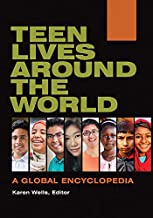
Teen Lives Around the World, Karen Wells,ed.

28 Tuesday Jan 2020

Posted by truebooktalks in Social Issues, social studies, Young Adult

≈ Leave a comment

Tags

faith, Family, Health, politics, Relationships, women

This set takes a very in-depth look at the lives of teens in many countries around the world. I was initially impressed by the clear introduction to the set. There is not an emphasis of one continent over another. The set is in alphabetical order by country starting with Australia (Some countries I thought might have been included were Afghanistan and Argentina.)

The lives of the teens living in each country is the main focus, but each section starts with a Country Overview. The discussion then moves to Schooling and Education, Extracurricular Activities: Art, Music and Sport, Family and Social Life, Religious and Cultural Rites of Passage, Rights and Legal Status, and finally, Inequalities. In each section the statistics contain in-text bibliographic referencing. A thorough bibliographical list concludes each section. It is definitely an encyclopedia designed for grades 12 and up since the readability of the text is grade 12 on the Fry chart.

The biographic information at the end of vol.2 tells the reader that the editor and the contributors are all very well-educated; and, thus, one would tend to believe that the factual material being presented would be true and accurate. However, that is not the case in this instance. As I began to read the text, I ran across this sentence: “Egypt also shares borders with Turkey and Jordan.” (The co-contributor is the editor.) That statement I knew to be totally false. Next, I ran across what I believed to be either a poorly formed sentence or an outright lack of knowledge of geography on the part of the contributor – which, by the way was the editor, herself. I submitted that particular sentence for scrutiny to a group of English teachers on a Facebook page, who – much to my surprise – pointed out, not only needed changes in the syntax, but also a flagrant error in geography. This is that sentence: “France is a Western European country bounded by the Atlantic Ocean and the Mediterranean Sea to the West and the South and the Alps and the Pyrenees to the East.” My teacher friends quickly pointed out that the Pyrenees were to the west of France, not to the east.

In the face of not one, but two, glaring errors in the text, I began to question whether or not to recommend the purchase of the set. At $204.00 it represents a big chunk of a school’s library budget. My main problem lies in the fact that if there are any factual errors in any non-fiction work, the entire piece becomes suspect.

I cannot, in good conscience recommend the purchase of this set. Although there most likely are many things that are true, it is not possible to trust all of them to the editor’s veracity. The reader should be receiving positive truth – not possible truth. Do not spend your limited resources on this set.


Share this:

  • Click to share on X (Opens in new window) X
  • Click to share on Facebook (Opens in new window) Facebook
Like Loading...

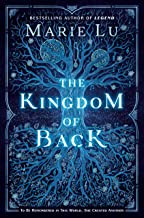
The Kingdom of Back by Marie Lu

22 Wednesday Jan 2020

Posted by truebooktalks in Fantasy, Historical Fiction, Uncategorized, Young Adult

≈ Leave a comment

Tags

Fantasy, Musicians, women

Many people know about Wolfgang Amadeus Mozart. Few know about Nannerl Mozart, his older sister. She performed with Wolfgang, and possibly even had written some of the music attributed to him. The two of them traveled together and performed all over Europe until Nannerl was no longer looked upon by the audiences they performed for as a child prodigy. Nannerl lived at a time when any child prodigy – either male or female was praised and noticed; but when she became a woman, she had to begin the role of a woman – subservient to the men in her life. Nannerl’s performing ceased, and she had to take a back seat to Wolfgang.

This story takes on 18th century social norms, but it does not remain an historical novel. There are elements of fantasy rolled into the tale. Nannerl once said that she had but one wish – to be remembered forever. That wish almost became true due to a influence of a mythical being from the Kingdom of Back – a kingdom of fairy princelings and queens of the night. But when Nannerl learned the true cost of having her wish come true, she was faced with the most important decision of her life. It was a decision that no one could make for her – not mother, father, or a famous brother.

I wondered whether or not the author could pull off a merger of history and fantasy, but Lu did a superb job of doing just that. By the time I was well into the story I was immersed into the concept of a fairy being responsible fo I recommend this historical/fantasy for middle school and high school readers.

Share this:

  • Click to share on X (Opens in new window) X
  • Click to share on Facebook (Opens in new window) Facebook
Like Loading...
← Older posts
Newer posts →
January 2026
M T W T F S S
 1234
567891011
12131415161718
19202122232425
262728293031  
« Nov    

Blog at WordPress.com.

  • Subscribe Subscribed
    • truebooktalks
    • Join 63 other subscribers
    • Already have a WordPress.com account? Log in now.
    • truebooktalks
    • Subscribe Subscribed
    • Sign up
    • Log in
    • Report this content
    • View site in Reader
    • Manage subscriptions
    • Collapse this bar
 

Loading Comments...
 

    %d